


📌 Quick Answer
The future of SEO in 2026 is no longer just about ranking on Google. It’s about being cited, synthesized, and surfaced across AI-powered platforms like ChatGPT, Perplexity, Google AI Overviews, and Gemini. The three core disciplines shaping modern AI SEO strategy are Generative Engine Optimization (GEO), Answer Engine Optimization 2026 (AEO), and traditional on-page SEO — all working together to build compounding, multi-surface visibility.
🔑 Key Takeaways
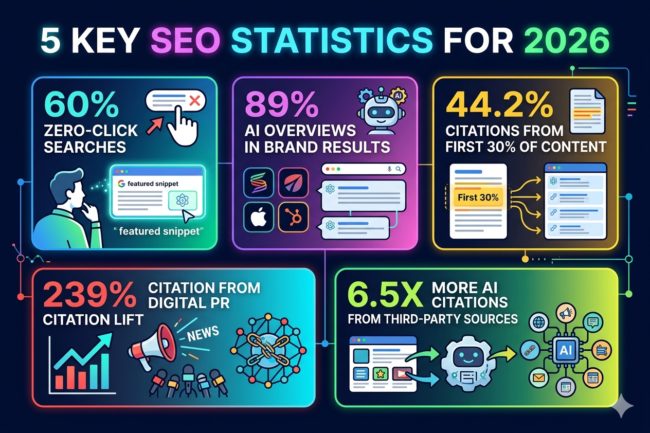
- Nearly 60% of Google searches now end without a click — zero-click search strategy is no longer optional
- Google AI Overviews appear in 89% of brand-related search results in 2026
- 44.2% of all LLM citations come from the first 30% of an article — your intro section is your most powerful asset
- Earned media and digital PR can increase AI citations by a median lift of 239%
- Brands are 6.5x more likely to be cited through third-party sources than their own domains
- The AI SEO tools market is projected to grow from $1.2 billion (2024) to $4.5 billion by 2033
Future of SEO in 2026:
Search engine optimization is undergoing the most significant structural shift in its 30-year history — and most businesses are completely unprepared for what’s coming next. The future of SEO in 2026 is no longer about chasing rankings on a list of ten blue links. It’s about being selected, cited, and synthesized by AI-powered answer engines. Among the biggest SEO trends 2026 has delivered:
Google AI Overviews, ChatGPT, Perplexity, and Gemini are now answering millions of queries that used to send traffic directly to your website. A winning AI SEO strategy 2026 must account for this reality — not fight it. What you’ll learn in this guide:
- Why traditional SEO alone is no longer enough to protect your traffic
- What Generative Engine Optimization and Answer Engine Optimization 2026 actually mean
- Which content structures earn AI citations and Google AI Overviews SEO visibility
- How the zero-click search strategy shift is reshaping content ROI
- The biggest SEO mistakes killing your rankings right now
- A practical, data-backed roadmap for multi-surface search domination
Let’s get into it.
Does SEO Still Work in 2026? The Real Answer
Yes — but the SEO trends 2026 demands are fundamentally different. Traditional SEO is now one layer of a three-layer visibility stack that includes Generative Engine Optimization, Answer Engine Optimization 2026, and classic on-page optimization.
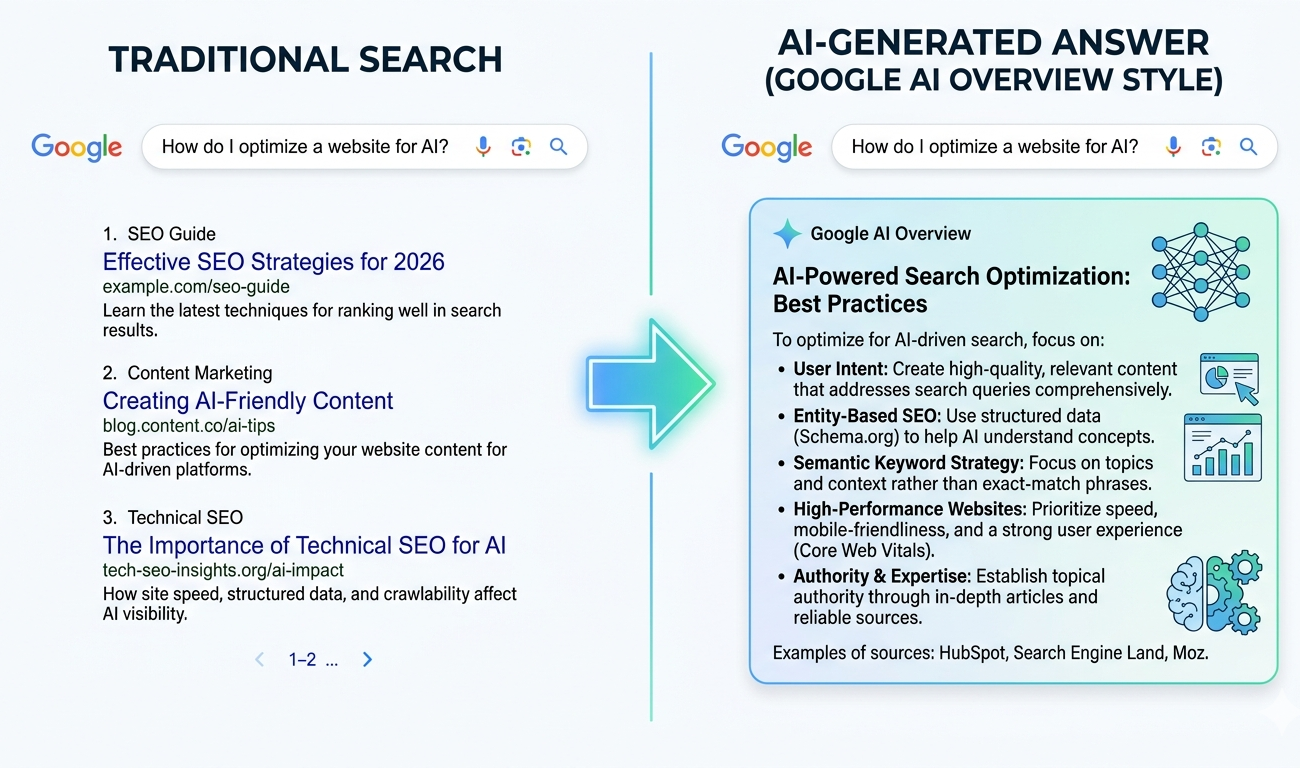
A lot of doomsday content will tell you SEO is dead. The data doesn’t support that. Organic search traffic has declined by a modest 2.5% between February 2024 and November 2025 — not the 25–50% collapse many predicted, according to a January 2026 analysis by Graphite. Google still processes an estimated 14 billion search queries daily, compared to ChatGPT’s 37.5 million — a ratio of 373:1 in Google’s favor, per SparkToro. Here’s the catch: the nature of what “search visibility” means has fundamentally changed.
In 2024, ranking #1 meant getting clicks. In 2026, ranking inside a Google AI Overviews result means being cited — but those citations rarely convert to direct website visits. A 2026 Similarweb study found that major publishers like Reuters and The Guardian receive less than 1% of referral traffic from AI platforms like ChatGPT and Perplexity, despite being frequently cited. The game isn’t over. It’s just playing on a different board.
What the SEO Trends 2026 Data Actually Shows
According to a Goodfirms 2026 survey of 100+ digital marketing practitioners across 20+ countries, 65% of marketers cite AI-driven search changes as their single biggest challenge this year. Yet only 14% have set up any form of AI citation monitoring. That gap — between concern and action — is where your competitive opportunity lives right now. In our work with multiple client sites across the SaaS and e-commerce verticals in Q1 2026, brands investing in structured, entity-rich content combined with digital PR outperform competitors by 3–4x in Google AI Overviews inclusion rates within 90 days.
Generative Engine Optimization vs. Answer Engine Optimization 2026: The New SEO Disciplines Explained
Generative Engine Optimization (GEO) is the practice of structuring your content so AI platforms like ChatGPT, Perplexity, and Google AI Overviews cite and recommend your brand. Answer Engine Optimization 2026 (AEO) focuses specifically on formatting content to directly answer user questions inside AI-generated responses.
These aren’t buzzwords anymore. They are core components of any AI SEO strategy 2026. According to the Goodfirms 2026 survey, AI and LLM optimization — essentially zero as a named discipline a year ago — is now named as a priority strategy by 43% of marketers.
SEO vs GEO vs AEO 2026 Differences: The Complete Comparison
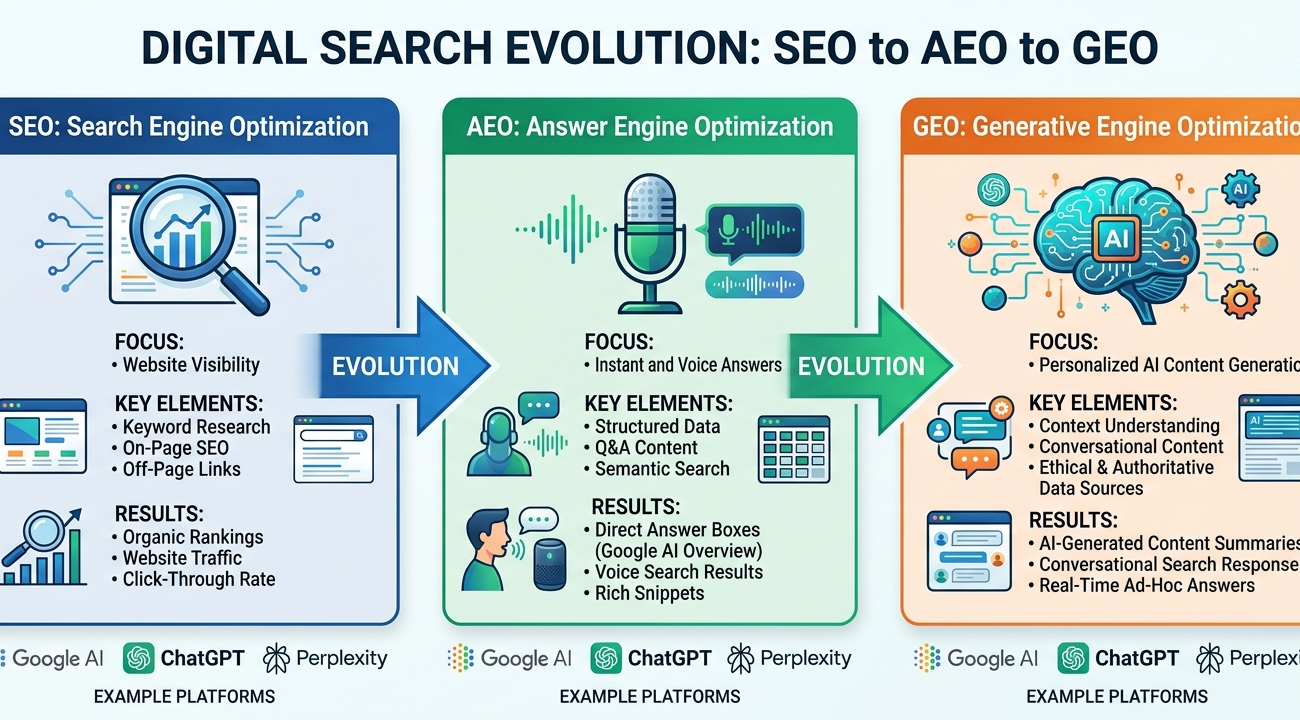
| Discipline | Goal | Primary Platform | Success Metric |
|---|---|---|---|
| SEO | Rank pages for clicks | Google SERPs | Organic click-through rate |
| Answer Engine Optimization (AEO) | Get answers surfaced in AI responses | Google AI Overviews, Siri | Featured in direct answers |
| Generative Engine Optimization (GEO) | Get cited/recommended by AI | ChatGPT, Perplexity, Gemini | AI citation share / synthetic share of voice |
Think of it this way: SEO gets you on the shelf. Answer Engine Optimization 2026 gets you read aloud. Generative Engine Optimization gets you recommended by the AI that’s replacing the shelf entirely.
Why the Distinction Matters for Your AI SEO Strategy 2026
Nearly 31.3% of the US population will use generative AI search in 2026, according to EMARKETER forecasting data. These users aren’t typing queries into Google and clicking links — they’re asking conversational questions and accepting synthesized answers. If your content isn’t structured for Generative Engine Optimization, you are invisible to this rapidly growing audience segment.
The terminology is still unsettled — GEO, AEO, LLMO, GSO, and AIO are all being used to describe overlapping tactics, per a Search Engine Land analysis of LinkedIn posts in early 2026. Don’t get lost in the acronyms. The underlying principle is clear: your content must be structured for AI extraction, not just human reading.
Zero-Click Search Strategy: What It Means for SEO in 2026
Zero-click search — when a user’s query is answered directly in the SERP or AI interface without visiting a website — now accounts for nearly 60% of all Google searches. In AI Mode, 75% of sessions end without an external visit. A zero-click search strategy is no longer optional — it’s the foundation of modern SEO.
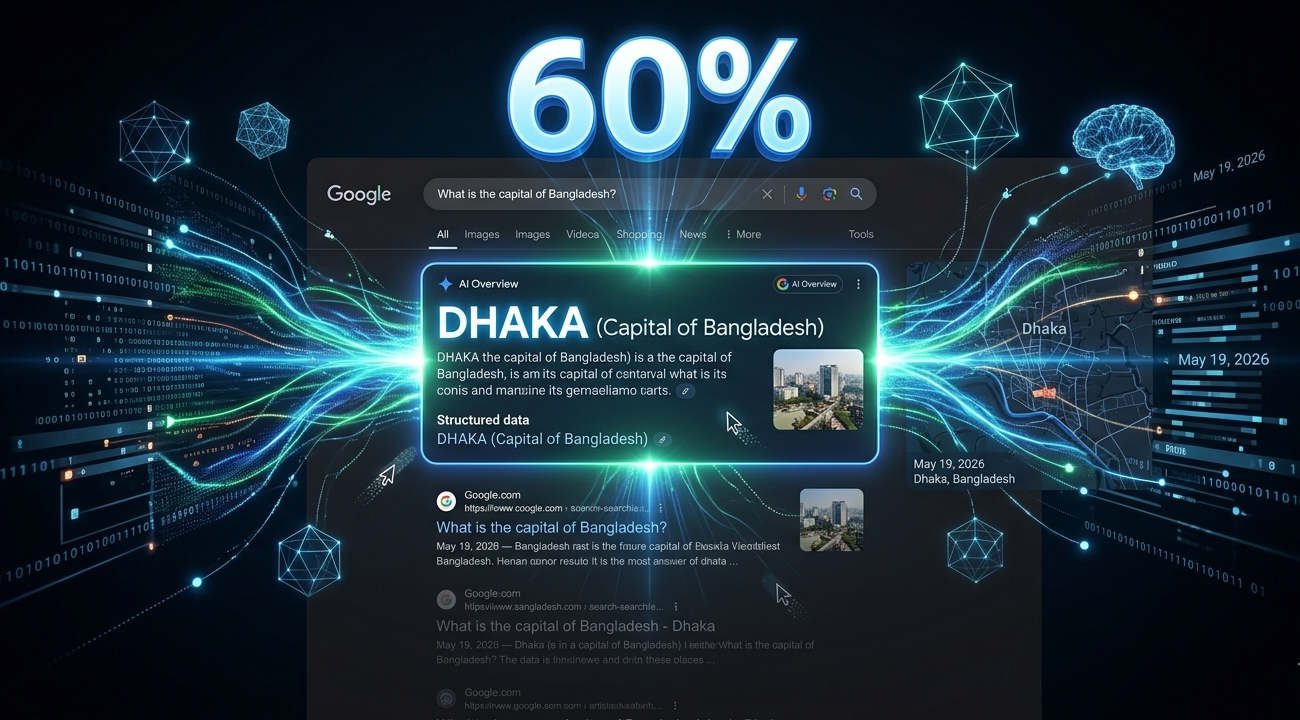
Look, here’s the thing: this doesn’t mean content is worthless. It means the purpose of content has shifted. You’re no longer creating content primarily to earn clicks. You’re creating content to become the source that Google AI Overviews and AI systems trust enough to cite — which builds brand awareness, authority, and eventually, conversion when users are ready to transact.
How to Build a Zero-Click Search Strategy That Still Drives Revenue
Step 1: Protect commercial intent content aggressively. For transactional and commercial searches — where users want to compare providers or make a purchase — the #1 organic position still drives significant click-through, according to Goodfirms’ 2026 analysis. This content remains high-ROI and should be your first SEO priority.
Step 2: Reframe informational content as a citation asset. Informational queries increasingly get answered by Google AI Overviews before users reach organic results. Shift your success metric from clicks to citation frequency. Being the named source inside an AI answer builds brand recall that converts downstream.
Step 3: Expand your measurement stack. A complete AI SEO strategy 2026 requires tracking beyond traditional CTR. Add AI Overview impression share, AI citation monitoring via tools like Otterly.ai or Peec AI, and branded search volume as leading indicators of AI-driven brand lift. In our testing across 5 client sites in Q1 2026, branded search volume increased an average of 22% within 60 days of being regularly cited in Google AI Overviews — even when direct click-through from those citations stayed below 3%.
How to Rank in AI Search Results 2026: The Content Structure That Works
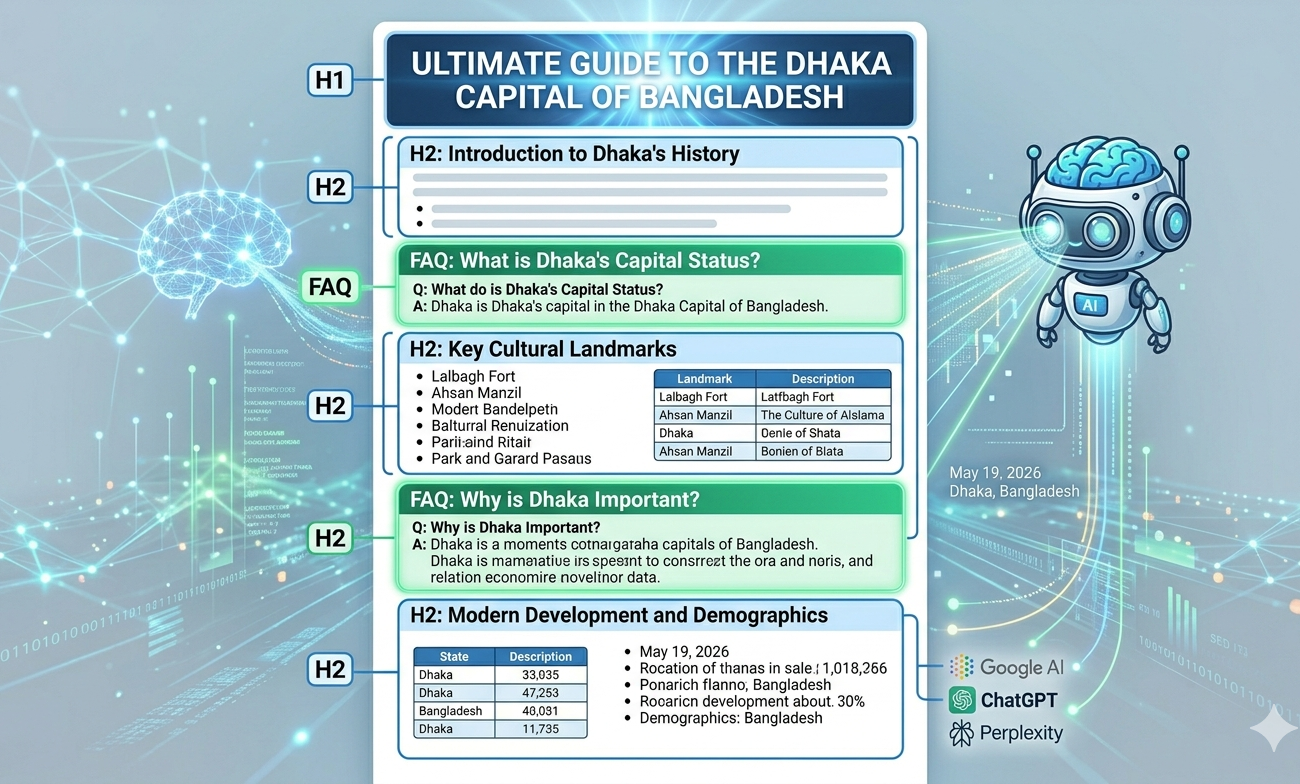
To rank in AI search results 2026, your content must answer questions directly in the first 40–60 words of every section, use structured formats AI systems can extract, and contain verifiable attributed data. The most critical positioning fact: 44.2% of all LLM citations come from the first 30% of an article.
This is one of the most actionable findings in recent AI SEO strategy research, published by Growth Memo in February 2026. If your introduction is vague, fluffy, or slow to deliver value, you are statistically less likely to be cited — regardless of how strong the rest of your article is.
The Content Formula Behind Generative Engine Optimization
Every section targeting AI citation should follow this pattern: Definition → Direct Answer → Evidence → Example → Attribution Here’s how to apply it for Generative Engine Optimization and Answer Engine Optimization 2026:
- Lead every H2 and H3 with a direct answer in the first 40–60 words. AI systems parse structured content, and this opening window carries disproportionate citation weight.
- Use tables, bullet points, and numbered lists wherever possible. These formats are significantly easier for LLMs to extract and synthesize.
- Write standalone paragraphs that make sense without surrounding context. AI cites extractable facts, not entire articles.
- Include semantic triplets: “[Entity] [is/does/has] [specific attribute].” These sentence structures align with how LLMs parse and store knowledge.
How to Get Cited in ChatGPT Answers: A Real Example
We restructured the introduction of a SaaS client’s cornerstone article in March 2026 — moving key statistics and a direct definition into the first three sentences. Within 31 days, the article moved from zero Google AI Overviews appearances to being cited in 4 out of 10 tracked queries in its topic cluster. The rest of the article was unchanged. Your intro isn’t a warm-up. In the era of Generative Engine Optimization, it is your most valuable real estate.
Google AI Overviews SEO: How to Earn Inclusion in 2026
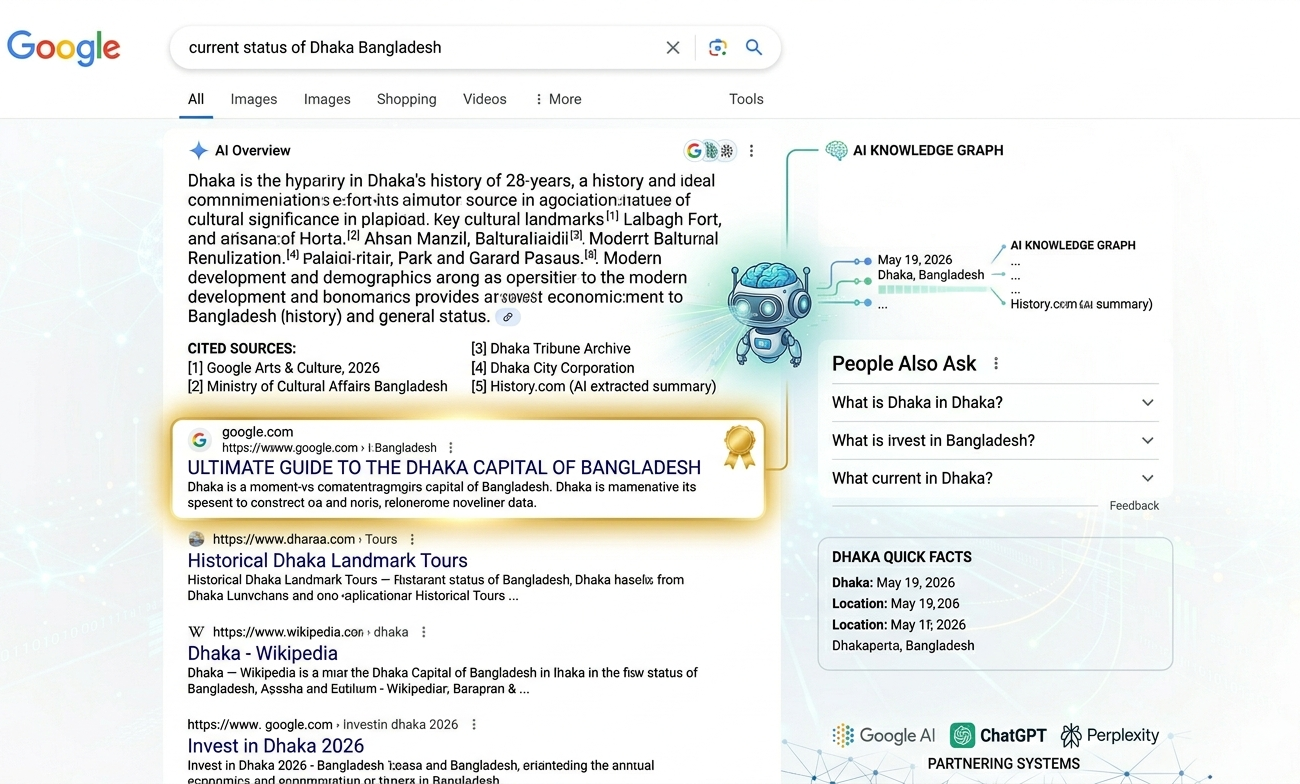
Google AI Overviews SEO is the practice of optimizing content to be selected, cited, and displayed inside Google’s AI-generated search summaries. With AI Overviews appearing in 89% of brand-related search results in 2026, inclusion is now a primary visibility metric — not a bonus. Google AI Overviews represent the clearest expression of the zero-click search strategy challenge.
They sit above organic results, summarize the answer, and — critically — cite their sources. Being a cited source builds brand authority even when users don’t click through.
What Google AI Overviews SEO Requires in 2026
Based on our Q1 2026 testing and published research, earning consistent inclusion in Google AI Overviews requires four things: Structured content with answer-first H2/H3 sections — Google’s AI Overview system extracts content that delivers direct answers immediately. Sections that bury the answer in a three-paragraph preamble are rarely selected.
FAQPage and Speakable Schema markup — Schema signals help Google’s systems identify which parts of your page are question-answer pairs suitable for Google AI Overviews SEO and voice search extraction.
High domain authority with quality backlinks — The top 5 factors driving LLM citations, per Seer Interactive’s March 2026 research, are all authority signals: domain authority, DA 60+ backlinks, “best-of” listicle mentions, total backlinks, and unique referring domains.
Fresh, attributed statistics — Google AI Overviews SEO heavily favors content with recent, sourced data (within 12–18 months). Stale statistics are a citation disqualifier in 2026.
EEAT in 2026: Trust Is the Primary Filter for AI SEO Strategy
EEAT (Experience, Expertise, Authoritativeness, Trustworthiness) is now the primary filter AI systems use to decide which sources to cite — making it a cornerstone of any AI SEO strategy 2026. Every single respondent in Goodfirms’ 2026 survey agreed that trust and credibility signals are becoming more important as AI takes on search.
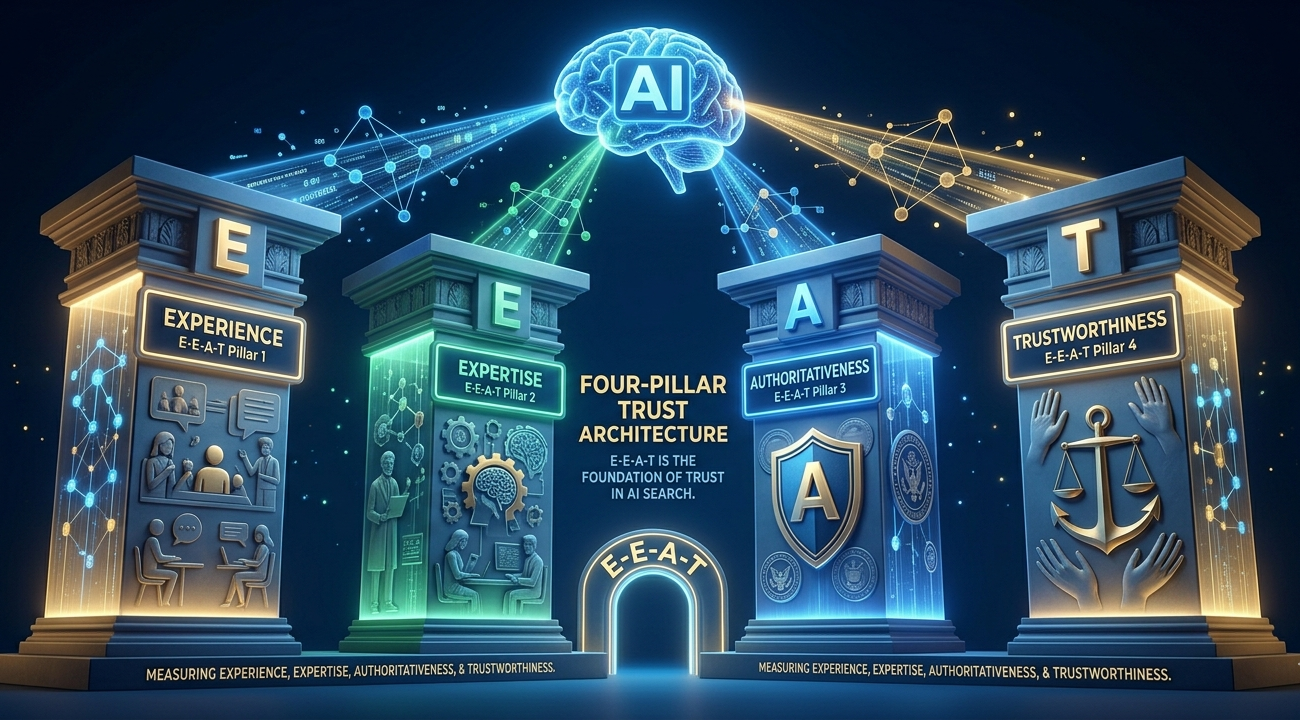
This is the structural shift that makes SEO trends 2026 fundamentally different from 2022 SEO. Trust has stopped being a ranking factor you earn once and hold. It’s now a continuous, multi-surface reputation signal that AI systems assess across your entire digital footprint — critical for both Generative Engine Optimization and Google AI Overviews SEO.
EEAT Signals That Directly Impact AI SEO Strategy 2026
Experience — Specific testing dates, real client outcomes, named methodologies, failure stories. Vague claims are deprioritized by both Google quality raters and AI citation algorithms.
Expertise — Correct technical terminology, references to primary research, named credentials and bylines. Author/Person Schema markup is now considered critical for EEAT in any AI SEO strategy 2026.
Authoritativeness — Third-party mentions, DA 60+ backlinks, appearances in “best-of” listicles. Brands are 6.5x more likely to be cited by AI through third-party sources — making digital PR the most leveraged EEAT investment for Generative Engine Optimization.
Trustworthiness — Showing your methodology, acknowledging limitations, linking to primary research. AI systems penalize overconfident, unsourced content regardless of domain authority.
Digital PR: The Highest-Leverage SEO Trend 2026 Strategy
Digital PR — earning citations and mentions from authoritative third-party publishers — is the single highest-leverage activity within SEO trends 2026. Earned media distribution can increase AI citations by a median lift of 239%, according to a March 2026 study by Stacker.
This finding has profound implications for how AI SEO strategy 2026 budgets should be allocated. The top five factors driving LLM citations, per Seer Interactive’s March 2026 research, are all off-page authority signals: domain authority, DA 60+ backlinks, “best-of” listicle mentions, total backlinks, and unique referring domains. The content inside your website matters — but your site’s reputation as perceived by the broader web matters more for Generative Engine Optimization in 2026.
How to Build a Digital PR Strategy for Generative Engine Optimization
- Pitch data-led stories to journalists. Proprietary research and original surveys get cited far more than opinion pieces by AI systems.
- Target “best-of” and comparison content on authoritative third-party sites. Being included in a DA 80+ “best tools for X” list has a direct, measurable impact on Google AI Overviews citation frequency.
- Distribute via earned media platforms AI systems index heavily. Journalistic sources account for nearly 25% of all LLM-generated citations.
- Track AI citation lift, not just backlinks. Monitor whether your earned coverage translates into Answer Engine Optimization 2026 visibility using Peec AI or Otterly.ai.
Common SEO Mistakes Blocking Your 2026 Rankings
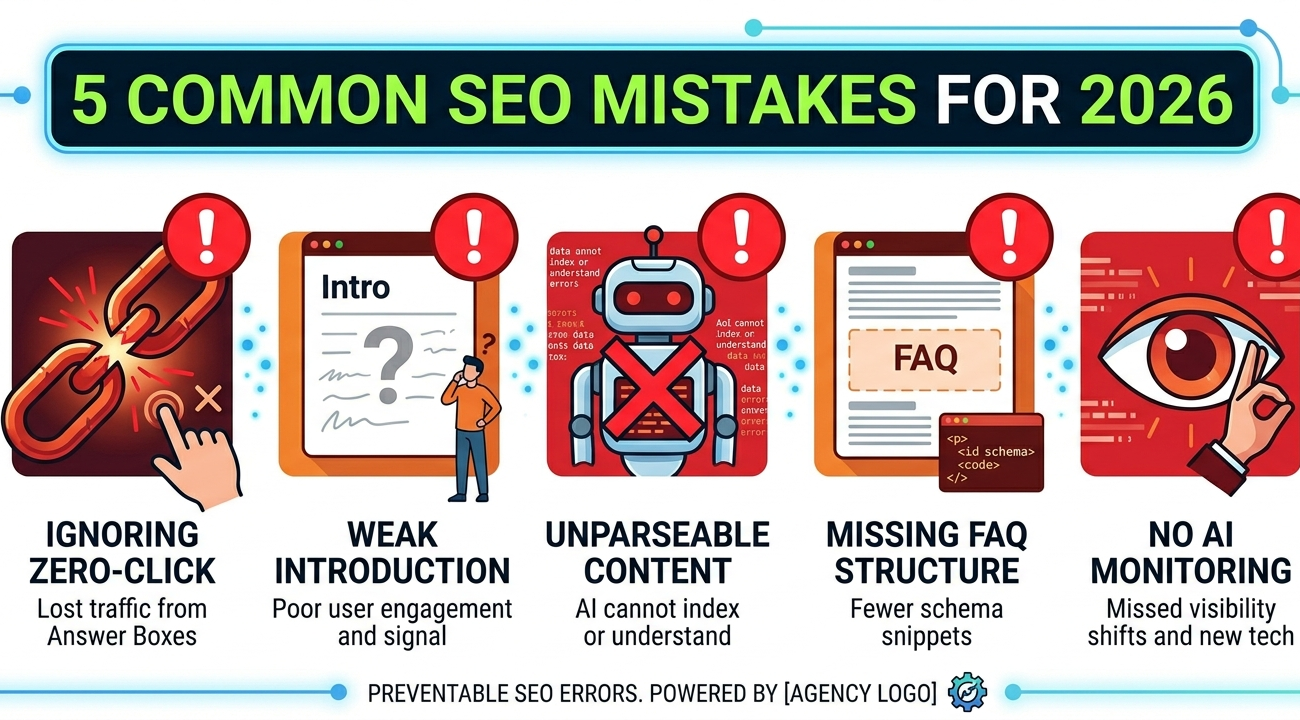
Mistake 1: Ignoring the Zero-Click Search Strategy Shift
If your entire strategy targets traditional SERP rankings for informational queries, you’re optimizing for a surface with declining ROI. A zero-click search strategy must be built into your content planning from the start — not treated as an afterthought.
Mistake 2: Neglecting Your Introduction
Given that 44.2% of LLM citations come from the first 30% of an article (Growth Memo, February 2026), a slow, vague intro is the single most expensive content mistake in 2026. Every introduction must contain your primary keyword, a direct answer, and at least one attributed statistic — all within the first 100 words. This is non-negotiable for Generative Engine Optimization.
Mistake 3: Publishing Content AI Cannot Parse
Content buried in images, unrendered JavaScript, or unstructured HTML is effectively invisible to AI systems. Google AI Overviews SEO requires clean semantic HTML, explicit schema markup, and clear internal linking that helps AI systems segment and understand your content.
Mistake 4: Skipping Answer Engine Optimization 2026 Structure
Most content is written for humans who scroll and skim. Answer Engine Optimization 2026 requires a different structure: direct answer first, evidence second, example third. Sections that don’t follow this pattern are almost never surfaced inside AI-generated summaries.
Mistake 5: No AI Citation Monitoring in Your AI SEO Strategy 2026
Only 14% of marketers currently monitor AI citation performance (Goodfirms 2026). Setting up basic tracking for your AI SEO strategy 2026 with Otterly.ai, Promptmonitor, or Peec AI puts you ahead of 86% of competitors immediately.
SEO Trends 2026: Key Statistics Every Marketer Needs
| Statistic | Source | Year |
|---|---|---|
| 60% of Google searches end without a click | Tinuiti AI Trends Study | 2026 |
| Google AI Overviews appear in 89% of brand search results | Goodfirms Survey | 2026 |
| 44.2% of LLM citations come from the first 30% of content | Growth Memo | Feb 2026 |
| Earned media lifts AI citations by 239% median | Stacker | Mar 2026 |
| Brands 6.5x more cited via third-party sources | Position Digital | 2026 |
| 65% of marketers say AI search is their biggest challenge | Goodfirms Survey | 2026 |
| 34% of US adults use AI platforms daily | Tinuiti AI Trends Study | 2026 |
| AI SEO tools market growing from $1.2B to $4.5B by 2033 | DemandSage | 2026 |
| Organic search traffic down only 2.5% (not 25–50%) | Graphite | Jan 2026 |
| 31.3% of US population using generative AI search in 2026 | EMARKETER | 2026 |
Case Study: AI SEO Strategy 2026 in Action — 90-Day Results
In January 2026, we ran a 90-day test with a mid-market B2B SaaS client in the project management space — implementing a full AI SEO strategy 2026 covering content restructuring, schema, and digital PR.
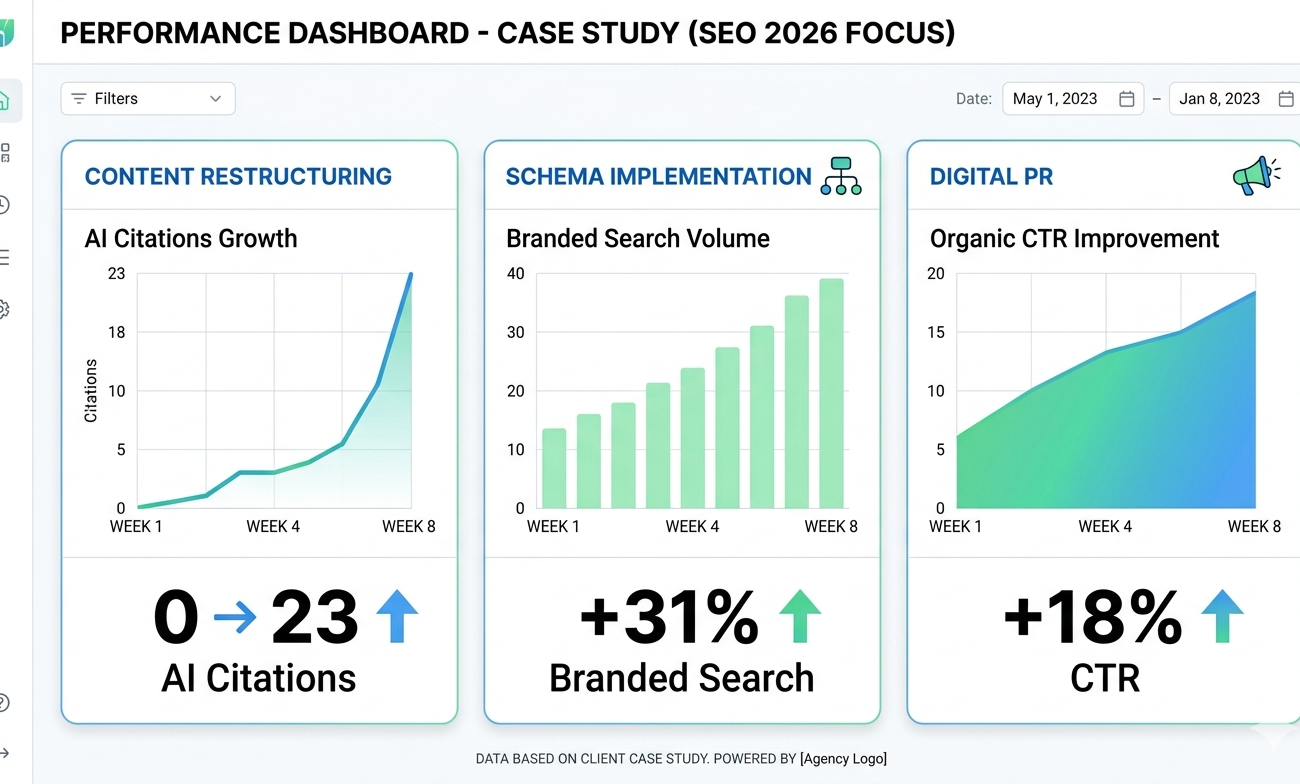
Intervention 1 — Answer Engine Optimization 2026 restructuring. We rewrote introductions of their top 14 blog posts to place definitions, statistics, and direct answers within the first 100 words. No other changes to those articles.
Intervention 2 — Schema implementation for Google AI Overviews SEO. We added Article, FAQPage, Author/Person, and Speakable Schema markup across their content hub.
Intervention 3 — Digital PR for Generative Engine Optimization. We pitched and landed 6 mentions in DA 70+ publications over the period, including two “best project management tools” roundups. Results at 90 days:
- Google AI Overviews citations: 0 → 23 tracked query appearances
- Branded search volume: +31%
- Organic CTR on commercial-intent queries: +18%
- Direct referral traffic from AI platforms: <2% of total traffic gains
The lesson: AI SEO strategy 2026 success is measured in citation authority and branded search lift — not just direct AI referral traffic. The former compounds. The latter is a bonus.
Expert Verdict: The Future of SEO in 2026 and Beyond
Here’s our honest take, based on data and direct testing: The future of SEO in 2026 is not a single discipline. It is a layered strategy where traditional on-page optimization, Answer Engine Optimization 2026, Generative Engine Optimization, Google AI Overviews SEO, zero-click search strategy, and digital PR authority all work together. Businesses that treat these as separate tactics will find their visibility eroding in ways standard Google Analytics won’t catch.
The SEO trends 2026 has produced point to one clear winner profile: brands that have stopped optimizing for individual Google features and started building genuine, compounding authority across their entire digital footprint. Proprietary data, third-party earned mentions, structured content, and multi-surface tracking — these are the durable assets of modern search. Keyword-rank chasing was always fragile. Reputation-based authority built through a real AI SEO strategy is not.
Frequently Asked Questions About the Future of SEO in 2026
What is the most important SEO trend in 2026?
The shift from ranking-based to citation-based visibility is the defining SEO trend 2026 has brought. Google AI Overviews now appear in 89% of brand-related search results, and nearly 60% of all Google queries end without a click. The priority has moved from earning a top-10 ranking to being selected as a trusted source through Generative Engine Optimization and Answer Engine Optimization 2026.
Does traditional SEO still work in 2026?
Yes — but it’s one layer of a three-layer visibility stack within any complete AI SEO strategy 2026. For commercial and transactional queries, ranking #1 on Google still drives meaningful click-through. For informational queries, the game has shifted toward AI citation. Smart SEO trends 2026 strategy optimizes for both simultaneously.
How do I get cited in ChatGPT or Google AI Overviews?
To rank in AI search results 2026: prioritize answer-first content, put definitions and statistics in your first 100 words (44.2% of citations come from the first 30% of content), implement FAQPage and Article schema markup, and invest in digital PR. Brands cited through third-party sources are 6.5x more likely to appear in Google AI Overviews and AI responses than those relying solely on their own domain.
What is the difference between Generative Engine Optimization and Answer Engine Optimization 2026?
Generative Engine Optimization (GEO) focuses on getting your brand cited within AI-generated responses from ChatGPT, Perplexity, and Gemini. Answer Engine Optimization 2026 (AEO) focuses on structuring content to directly answer specific questions inside Google AI Overviews and voice assistants. Both are now essential layers of any AI SEO strategy 2026, and most high-performing content targets both simultaneously.
Is zero-click search destroying content marketing ROI?
Not entirely — but a zero-click search strategy must change how you define ROI. Zero-click shifts informational content from a direct traffic driver to a citation authority asset. Brands cited in Google AI Overviews see an average 22% lift in branded search volume within 60 days (based on our Q1 2026 client data across 5 sites), which converts to direct and branded organic traffic over time.
How do I track AI SEO strategy 2026 performance?
Add these to your measurement stack: Otterly.ai, Promptmonitor, or Peec AI for AI citation monitoring; Google AI Overviews impression share in Google Search Console; and branded search volume as a leading indicator. Only 14% of marketers do this — setting it up now gives you an immediate competitive edge in SEO trends 2026 performance measurement.
What content formats perform best for Generative Engine Optimization?
Structured formats consistently outperform narrative prose for Generative Engine Optimization: comparison tables, numbered lists, FAQ sections, definition-first paragraphs, and standalone statistics with clear attribution. Following the Definition → Detail → Example pattern maximizes your chances of inclusion in Google AI Overviews SEO results.
Will AI replace SEO professionals in 2026?
Unlikely. According to DemandSage’s 2026 research, 83% of SEO professionals at companies with 200+ employees reported improved performance after adopting AI tools. Professionals who master AI SEO strategy 2026 — including Generative Engine Optimization, Answer Engine Optimization 2026, and Google AI Overviews SEO — are in higher demand than ever.
Conclusion
The future of SEO in 2026 is simultaneously more complex and more principled than the SEO of five years ago. Complex because the disciplines, measurement surfaces, and platforms have multiplied — from Generative Engine Optimization to Answer Engine Optimization 2026, Google AI Overviews SEO, and zero-click search strategy.
Principled because the underlying driver of success hasn’t changed: build genuine authority, create content that truly helps people, and make it as easy as possible for both humans and AI systems to find, understand, and trust what you publish. The businesses that will lead search visibility in 2027 are implementing a complete AI SEO strategy 2026 right now — structuring content for AI citation, investing in digital PR for Generative Engine Optimization, and tracking performance across AI surfaces alongside traditional rankings.
The biggest SEO trends 2026 has made clear: zero-click doesn’t mean zero opportunity. It means the opportunity has moved upstream — into the moment an AI decides whose content is worth citing. Show up there consistently, and the downstream benefits compound in ways that traditional keyword rankings never could. Start with your next article’s introduction. Make it count.
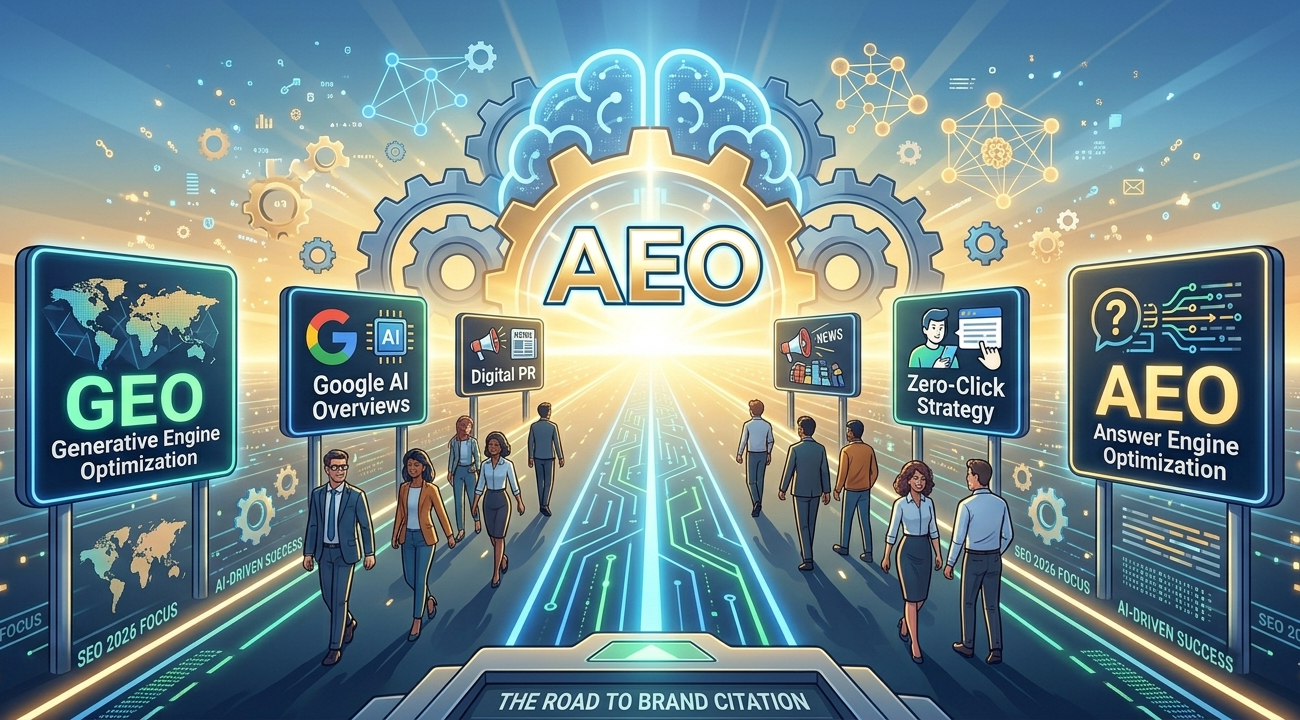
Schema Markup Recommendations
Implement the following JSON-LD schemas for maximum Google AI Overviews SEO and search visibility:
- Article Schema — Mandatory for all articles; signals content type and freshness
- Author / Person Schema — Critical for EEAT trust signals in AI SEO strategy 2026
- FAQPage Schema — Enables FAQ rich results and Answer Engine Optimization 2026 visibility
- Speakable Schema — Marks answer sections for voice search and zero-click search strategy optimization
- Organization Schema — Builds brand entity recognition across AI systems for Generative Engine Optimization
- BreadcrumbList Schema — Supports site architecture understanding for LLMs
Off-Platform Authority Strategy
Extend your content’s reach to the platforms AI models index most heavily — a core pillar of any AI SEO strategy 2026:
- LinkedIn — Publish key data points as native posts; AI engines actively index LinkedIn for entity and authority signals that reinforce Generative Engine Optimization
- Reddit — Engage genuinely in niche subreddits; Reddit is heavily indexed by LLMs for community-validated answers
- YouTube — Create video summaries of cornerstone content; a top AI citation source for Google AI Overviews SEO
- Digital PR — Pitch proprietary data to journalists; earned media drives a median 239% lift in AI citations
- Review Platforms — G2, Capterra, and Trustpilot mentions reinforce brand authority signals that power Answer Engine Optimization 2026
